SMS Automation: The 98% Open Rate Revenue Engine
 Maximus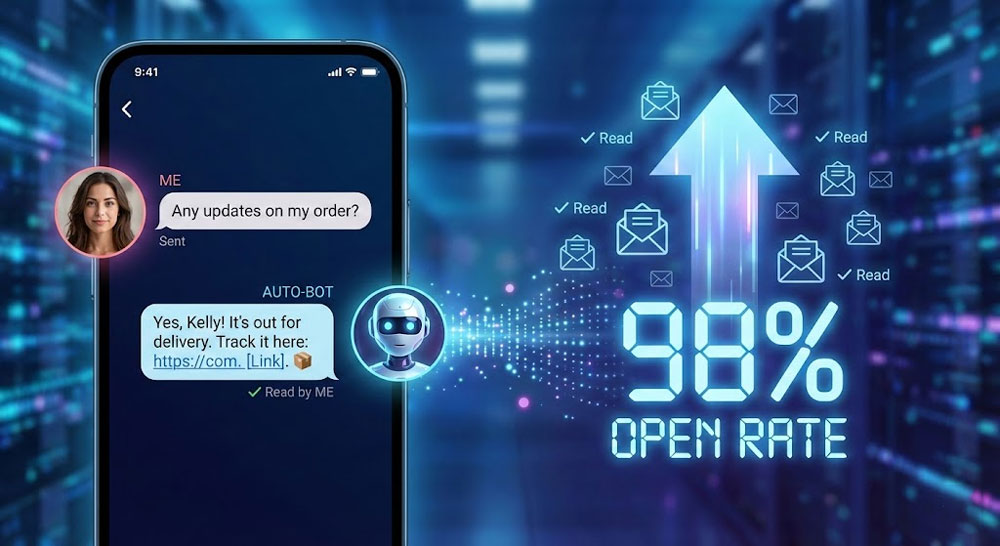
In this article:
- The 98% Open Rate: Why SMS Wins
- The Mechanics: Triggers & Workflows
- 5 Essential Use Cases for Business
- The Rules of the Road: A2P 10DLC
- Etiquette: How Not to Be Spammy
- Measuring Success: What to Track
- Final Thoughts
SMS automation is the undisputed king of speed-to-lead. In a marketing landscape where email open rates struggle to hit 20% and social media algorithms bury organic reach, text messaging remains the only channel with a staggering 98% open rate within the first three minutes.
But effective SMS automation is not about spamming prospects with generic blasts. It is about building intelligent, reactive workflows that engage leads, confirm appointments, and reactivate cold databases—all without you lifting a finger. It transforms your communication from a manual task into an "always-on" revenue engine.
The 98% Open Rate: Why SMS Wins
The modern consumer is distracted. To cut through the noise, you need to meet them where they spend 4+ hours a day: their phone. Unlike email, which can sit unread for days, a text message demands immediate attention.
- Speed: 90% of texts are read within 3 minutes.
- Engagement: SMS response rates are 209% higher than phone, email, or Facebook.
- Preference: 75% of consumers say they would like to receive offers via SMS.
The Mechanics: Triggers, Actions, and Logic
To implement SMS automation, you need to move beyond simple "mass texting" tools and adopt a workflow-based approach. A true automation engine consists of three parts:
1. The Trigger (The "When")
This is the event that kicks off the text. It could be a form submission, a missed call, a tag added in your CRM, or a specific date (like a birthday).
2. The Action (The "What")
This is the message itself. Modern tools allow for "Dynamic Values," meaning the text isn't generic; it pulls the contact's name, appointment time, or specific interest.
3. The Logic (The "If/Then")
This is where the magic happens. You don't want to keep texting someone who has already replied. "Stop on Response" logic ensures the robot shuts up the moment a human takes over.
5 Essential Use Cases for Business
While the possibilities are endless, there are five "money workflows" that every service business should deploy immediately.
1. The Missed Call Text-Back
62% of calls to small businesses go unanswered. When you miss a call, you usually lose the customer. SMS automation solves this by instantly texting the caller.
2. Appointment Reminders & Confirmations
No-shows kill profitability. An automated SMS cadence (24 hours before, 1 hour before) ensures the prospect remembers the meeting. You can even ask for a "C" to confirm.
3. Database Reactivation
Do you have a list of old leads who never bought? Use automation to send a "9-Word Question" to wake them up. Example: "Are you still looking to fix your roof this season?" We typically see a 5-10% immediate response rate from "dead" leads.
4. Review Requests
After a job is marked "Complete" or a deal is "Closed Won," the system should wait 1 hour and then text the client a direct link to your Google Review page. This increases review volume by 300% on average.
5. Speed-to-Lead Nurture
When a lead fills out a Facebook Ad form, they expect an instant response. Automation ensures they get a text within seconds, stopping them from scrolling to your competitor.
The Rules of the Road: A2P 10DLC Compliance
The "Wild West" of texting is over. To ensure your SMS automation actually reaches the phone (and doesn't get blocked by carriers), you must adhere to A2P 10DLC (Application-to-Person 10 Digit Long Code) regulations.
ClientMax handles this registration process, ensuring:
- Brand Registration: Verifying your business identity with The Campaign Registry.
- Opt-Out Language: Automatically appending "Reply STOP to unsubscribe" to initial messages.
- Consent Management: Ensuring you only text people who have explicitly opted in.
Ignoring these rules will result in your messages being filtered as "Spam" by AT&T, T-Mobile, and Verizon.
Etiquette: How Not to Be Spammy
Just because you can text your leads doesn't mean you should be annoying. Good automation feels human.
- Respect Time Zones: Configure "Sending Windows" so your bot doesn't text a lead at 3:00 AM.
- Use "Human" Delays: Don't reply in 1 millisecond. Add a 30-second "Wait" step to simulate a human typing.
- Keep it Short: SMS is for brevity. If you need to send a novel, send an email.
- Personalize: Never send a generic "Hello." Always use [First_Name].
Measuring Success: What to Track
How do you know if your automation is working? You need to track the right KPIs:
- Delivery Rate: Should be >95%. If lower, your A2P registration may be failing.
- Response Rate: The percentage of people who reply. A good benchmark is 15-30%.
- Opt-Out Rate: If more than 1% of people reply "STOP," your messaging is too aggressive or irrelevant.
Final Thoughts
Your customers are on their phones. SMS automation allows you to meet them there with speed, relevance, and consistency. Whether it's saving a missed call, confirming an appointment, or waking up a cold lead, SMS is the highest-ROI lever you can pull in your marketing stack today.
But remember: The goal isn't just to automate messages; it's to automate conversations that lead to revenue.
If you are ready to turn every text message into a revenue opportunity, click the golden button below to start your free trial with ClientMax now.
Ready to take your business to the next level?
Automate your growth and operations today.